
In today’s digital landscape, social media is no longer just a platform for personal interaction. It has become one of the most powerful tools for marketing, branding, lead generation, and customer engagement. However, simply posting content is not enough to achieve meaningful results. To truly understand and maximize the impact of your efforts, you need to track and analyze Social Media KPIs.
Whether you are a small business owner, a digital marketer, or a brand strategist, understanding the right KPIs (Key Performance Indicators) is crucial for turning social media activity into measurable business outcomes. This comprehensive guide covers everything you need to know about social media KPIs, including their types, importance, tracking methods, tools, and best practices.

Social Media KPIs are measurable values that help determine the success and performance of social media strategies. Unlike vanity metrics such as likes or views, KPIs provide a clearer understanding of whether your social media activities are aligned with your business goals.
Examples of key social media KPIs include:
- Engagement rate
- Click-through rate (CTR)
- Conversion rate
- Follower growth
- Reach and impressions
- Customer sentiment
These indicators help marketers and businesses make informed decisions, allocate resources more effectively, and continually improve their digital strategies.
Why Social Media KPIs Matter
Without KPIs, it is nearly impossible to measure the real value of social media efforts. Here are some key reasons why tracking KPIs is essential:
- Measurable Results: KPIs give you clear evidence of how your social media strategy is performing.
- Strategic Decision-Making: By analyzing KPIs, you can make data-driven decisions instead of relying on assumptions.
- Performance Tracking: KPIs allow you to track progress over time and compare different campaigns.
- ROI Measurement: They help you connect your efforts to revenue and business growth.
- Continuous Optimization: KPIs highlight what works and what needs improvement, enabling smarter strategies.
Types of Social Media KPIs

Social media KPIs can be categorized based on their specific purpose. Understanding these categories will help you focus on the metrics that align with your goals.
1. Awareness KPIs
Awareness KPIs measure how many people are seeing or discovering your brand on social media platforms.
| Metric | Description | Why It Matters |
| Reach | Total number of unique users who see your content | Shows how far your message spreads |
| Impressions | Number of times your content is displayed | Indicates how often your content is shown |
| Follower Growth Rate | How quickly your audience is growing | Tracks community expansion |
| Brand Mentions | Number of times your brand is mentioned | Reflects brand recognition and buzz |
A high number of impressions but low engagement might indicate that your content is visible but not resonating with your audience.
2. Engagement KPIs
Engagement KPIs measure how users interact with your content.
| Metric | Description | Why It Matters |
| Engagement Rate | (Total interactions ÷ Total followers) × 100 | Measures audience interaction levels |
| Likes and Reactions | Number of positive interactions | Indicates interest |
| Comments | Number of comments received | Reflects active engagement |
| Shares or Retweets | Number of times your content is shared | Shows how valuable or viral your content is |
| Saves | Number of times users save your post | Indicates that your content is considered useful |
Engagement rate is often more meaningful than raw engagement numbers because it reflects the proportion of your audience that is actively responding to your content.
3. Traffic KPIs
Traffic KPIs measure how much website or landing page traffic comes from your social media activity.
| Metric | Description | Why It Matters |
| Click-Through Rate (CTR) | Percentage of users who click on your link | Measures the effectiveness of your call to action |
| Link Clicks | Total number of clicks on your links | Shows how well content drives action |
| Landing Page Views | Number of visitors who reach your landing page | Evaluates campaign effectiveness |
Using tools like Google Analytics and UTM parameters helps track the exact source of your traffic.
4. Conversion KPIs
Conversion KPIs measure how effectively your social media campaigns turn audiences into leads or customers.
| Metric | Description | Why It Matters |
| Conversion Rate | Percentage of users who take a desired action | Shows the effectiveness of campaigns |
| Leads Generated | Number of leads captured through social media | Tracks business opportunities |
| Sales | Number of purchases or transactions | Reflects revenue generation |
| Cost Per Conversion | Total cost ÷ number of conversions | Helps assess cost efficiency |
These KPIs are critical for determining the return on investment (ROI) of social media marketing efforts.
5. Customer Experience and Loyalty KPIs
Customer loyalty and satisfaction are equally important as engagement and conversions. These KPIs measure how well your brand interacts with customers on social platforms.
| Metric | Description | Why It Matters |
| Response Time | How quickly your team responds to customer inquiries | Affects customer trust and satisfaction |
| Customer Satisfaction Score (CSAT) | Feedback from customers | Indicates perception of your brand |
| Net Promoter Score (NPS) | Likelihood of customers recommending your brand | Predicts future growth |
| Repeat Engagement | How often customers return to engage with your content | Reflects loyalty and retention |
Responding promptly to customer inquiries can significantly enhance brand trust and satisfaction.
How to Set Effective Social Media KPIs
Not every KPI is relevant to every brand. Choosing the right ones requires strategy and alignment with business objectives.
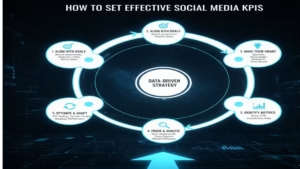
Step 1: Align KPIs with Business Goals
- If your goal is brand awareness, focus on reach, impressions, and follower growth.
- If your goal is lead generation, focus on CTR, conversion rates, and leads generated.
- If your goal is customer loyalty, track response time, CSAT, and NPS.
Step 2: Use the SMART Framework
Use the SMART criteria to ensure your KPIs are:
- Specific
- Measurable
- Achievable
- Relevant
- Time-bound
Step 3: Benchmark Performance
Use past performance and industry standards to set realistic expectations and track progress over time.
Step 4: Review and Adjust Regularly
Social media trends change frequently, so revisit your KPIs periodically to ensure they remain relevant.
Tools to Track Social Media KPIs
Manually tracking KPIs can be overwhelming. Fortunately, there are several powerful tools designed to help.
| Tool | Use Case | Best For |
| Hootsuite | Scheduling and analytics | Agencies and businesses |
| Sprout Social | Advanced reporting and engagement | Marketing teams |
| Google Analytics | Traffic and conversion tracking | All business sizes |
| Buffer | Content scheduling and engagement | Small businesses |
| Meta Business Suite | Insights for Facebook and Instagram | Brand pages |
| Socialbakers | Competitor analysis and benchmarking | Enterprises |
UTM tracking is particularly effective for linking social media activity directly to traffic and conversion data.
Important Social Media KPIs by Platform
Different platforms have unique behaviors and audiences, so it’s important to tailor your KPI tracking accordingly.
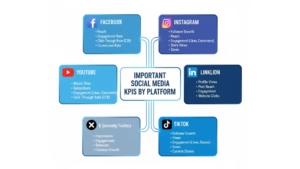
- Reach and impressions
- Engagement rate
- Page likes and follower growth
- Post saves and shares
- Click-through rate
- Video views and watch time
- Engagement rate per post
- Story views and interactions
- Profile visits
- Saves and shares
- Follower growth
- Link clicks
X (formerly Twitter)
- Tweet impressions
- Engagements (likes, retweets, replies)
- Hashtag performance
- Link clicks
- Profile visits
- Follower growth
- Post engagement rate
- Profile views
- Connection or follower growth
- Click-throughs
- Shares and comments
- Lead form submissions
YouTube
- Watch time
- Views and impressions
- Subscribers gained or lost
- Click-through rate on thumbnails
- Audience retention rate
- Engagement (likes, comments, shares)
TikTok
- Video views
- Engagement rate
- Shares and saves
- Follower growth
- Watch time and retention
- Link clicks
Common Mistakes to Avoid When Tracking Social Media KPIs
Even experienced marketers can make errors in KPI tracking. Some of the most common include:
- Focusing on vanity metrics without measuring actual business impact.
- Not setting clear goals before launching campaigns.
- Comparing performance across platforms without context.
- Ignoring qualitative data such as customer sentiment.
- Collecting data but failing to act on insights.
Avoiding these mistakes ensures that your KPI tracking remains meaningful and actionable.
How Often to Track Social Media KPIs
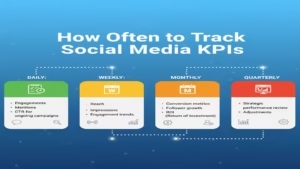
- Daily: Engagements, mentions, and CTR for ongoing campaigns
- Weekly: Reach, impressions, and engagement trends
- Monthly: Conversion metrics, follower growth, and ROI
- Quarterly: Strategic performance review and adjustments
Regular tracking ensures timely adjustments and accurate reporting.
How to Use KPIs to Optimize Campaigns
Identify What Works
Analyze top-performing posts and campaigns to understand what resonates with your audience.
A/B Testing
Experiment with different headlines, images, CTAs, and posting times to determine what improves KPIs.
Adjust Posting Schedules
Use audience insights to post during peak activity times.
Personalize Content
Target different audience segments with tailored content for better engagement and conversions.
Optimize Ad Spend
Allocate more budget to campaigns with the strongest performance indicators.
Real-World Example of KPI Success
A health and wellness brand launches a new protein shake with a clear KPI strategy.
- Goal: Increase brand awareness and sales.
- KPIs Tracked: Reach, CTR, Conversion Rate, ROI.
- Strategy:
- Instagram Reels with influencers
- Facebook Ads with targeted CTAs
- YouTube tutorials and product explanations
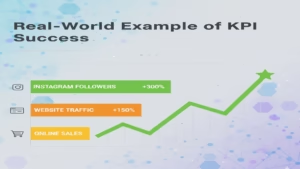
Results after 30 days:
- Reach: 2 million unique users
- CTR: 8.5 percent
- Conversion rate: 3.2 percent
- ROI: 5 times the ad spend
The results were achieved through clear KPI planning and consistent optimization.
Best Practices for Reporting Social Media KPIs
- Use Dashboards: Centralize your data for quick access and analysis.
- Visualize Results: Charts and graphs make data more understandable.
- Highlight Key Metrics: Focus on results that impact business objectives.
- Provide Actionable Insights: Reports should suggest improvements, not just show numbers.
- Tailor Reports to Stakeholders: Provide strategic overviews for executives and detailed metrics for marketing teams.
The Future of Social Media KPIs
The world of social media analytics is evolving rapidly. Future trends include:
- Advanced AI-driven sentiment analysis
- More accurate attribution models connecting social media to revenue
- Increased focus on video-based KPIs
- Real-time dashboards powered by automation
- Unified cross-platform measurement tools
Staying ahead of these trends will help brands maintain a competitive advantage.
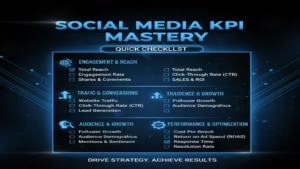
Quick KPI Checklist for Social Media Marketers
- Define clear business goals
- Select KPIs aligned with those goals
- Use reliable analytics tools
- Focus on trends and patterns, not just numbers
- Optimize campaigns based on KPI performance
- Report regularly and accurately
- Stay updated with evolving measurement trends
Conclusion
Social media KPIs are the foundation of any successful digital marketing strategy. They turn social media from a guessing game into a structured, measurable growth engine. By identifying the right KPIs, setting SMART goals, and continuously optimizing your strategy, you can achieve meaningful results that drive business impact.
Whether your focus is awareness, engagement, traffic, or conversions, KPIs provide the clarity needed to make informed decisions. Start with a few key metrics, measure consistently, and scale your strategy based on data. Over time, these KPIs will help you build a stronger, more effective social media presence.